Klein Cable Tracer Explained: A UK Buyer's Guide
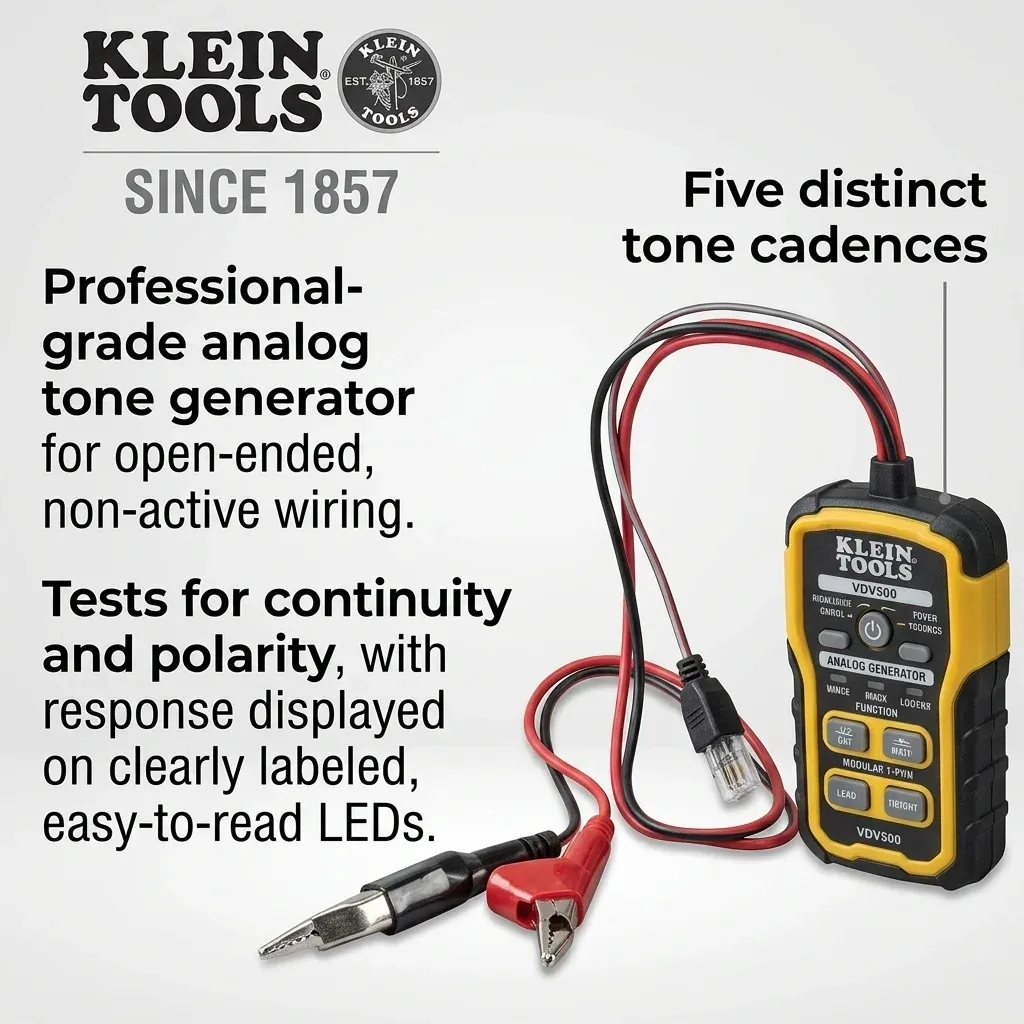
Navigating a spaghetti-like comms cabinet in a retrofitted London office building is a notorious frustration for UK electricians and telecom engineers. When faced with dozens of unlabelled Cat5e cables or a bundle of identical data wires, guesswork is not an option. Precision identification is required to prevent accidental disconnections and costly downtime.
Enter the Klein cable tracer. Long considered a staple on trade counters across the country, this diagnostic tool allows professionals to track non-energised wiring through complex networks. Understanding how this specific tool operates, its limitations, and how it compares to dedicated network tracers is essential for anyone dealing with modern electrical and data installations.
This buyer's guide examines the mechanics of the Klein cable tracer, its application in UK environments, and how to maximise its efficiency on site.
Key Takeaways
- Functionality: A Klein cable tracer uses an analogue tone generator and an inductive probe to identify non-energised wires in dense bundles.
- UK Applications: Ideal for tracing telecom, data (Cat5e/Cat6), and dead electrical circuits prior to testing under BS7671 guidelines.
- Safety First: These tools are strictly for non-energised systems; proving dead with an approved voltage indicator is mandatory before connection.
- The CableProbe Alternative: For engineers requiring instant identification in dark comms cabinets, CableProbe offers a specialised, purpose-built solution.
What is a Klein Cable Tracer?
At its core, a Klein cable tracer is a two-part diagnostic kit comprising a tone generator and an amplifier probe. The tone generator injects a distinct audio frequency signal onto a target wire. The probe, which features an inductive tip, detects this signal's electromagnetic field without requiring direct physical contact with the copper conductor.
When the probe nears the correct wire, an internal speaker emits a loud tone. The volume peaks when the probe is directly touching the specific cable insulation.
This non-destructive testing method is vital. Stripping insulation to test continuity manually compromises the integrity of the installation. For a deeper dive into the underlying technology, reading our ultimate guide to wire tracer probes in the UK provides an excellent technical foundation.
Why the Klein Cable Tracer is Common on UK Sites
Walk onto any commercial site, from an NHS server room upgrade to a domestic rewiring project, and you will likely spot a Klein cable tracer in a toolbag. Their prevalence is driven by a mix of durability and straightforward functionality.
Robust Build Quality
UK building sites present harsh conditions. Damp plaster, cold environments, and the inevitable drops onto concrete floors demand robust tools. Klein constructs its probes with rugged plastics that withstand the rigours of daily trade use. The tips are usually replaceable, which extends the lifespan of the unit significantly after prolonged scraping against punch-down blocks.
Versatility Across Cable Types
Electricians and data installers rarely work with a single type of cable. A standard Klein cable tracer typically features alligator clips for bare wires and RJ11/RJ45 plugs for direct connection to data and telephone sockets. This allows the user to switch seamlessly between tracing a dead ring main (using the clips on the copper cores) and identifying a specific data drop in a multi-story office.
Many professionals refer to this specific setup as a tone probe, which is exactly how the analogue transmission functions across these varied cable types.
Step-by-Step: Using a Klein Cable Tracer Safely
Operating a tracer requires a methodical approach. Rushing the process often leads to false positives, where the tone bleeds onto adjacent cables—a phenomenon known as inductive coupling.
Step 1: Safe Isolation Procedure
Safety cannot be compromised. A Klein cable tracer is designed exclusively for non-energised wiring. Connecting the tone generator to a live 230V UK mains circuit will instantly destroy the internal circuitry and poses a severe shock risk.
Always perform a safe isolation procedure. Use an approved two-pole voltage indicator and a proving unit to confirm the circuit is entirely dead before attaching any diagnostic clips.
Step 2: Connecting the Tone Generator
Once the circuit is isolated, connect the tone generator. If you are tracing a data cable, plug the RJ45 connector directly into the wall port. For electrical or coaxial cables, use the alligator clips. Attach the red clip to the target wire and the black clip to a known earth point.
Grounding the black clip independently (rather than to another wire in the same bundle) creates a much stronger, clearer signal that travels further down the cable run.
Step 3: Probing the Bundle
Move to the other end of the cable run—often a patch panel or consumer unit. Turn on the amplifier probe. Sweep the inductive tip across the outer jackets of the cable bundle. The tone will grow louder as you approach the target wire.
To eliminate false positives caused by signal bleed, gently separate the loudest cables from the bundle. Tap the tip of the probe against each individual cable jacket. The wire that produces the sharpest, most distinct tone is your target.
The Cost of Inefficient Cable Identification
Time spent blindly searching for the correct wire directly impacts project profitability. Relying on guesswork is an outdated practice.
"According to data from the Building Services Research and Information Association (BSRIA), cable identification and fault finding can consume up to 35% of total labour time during commercial electrical and data retrofits."
Equipping your team with a reliable Klein cable tracer drastically reduces this wasted time. Instead of two engineers using radios and a multimeter to test continuity wire by wire, a single engineer can tone and trace an entire patch panel independently.
For those tackling complex domestic renovations, understanding the broader applications of these tools is crucial. You can learn more by exploring our detailed breakdown of the cable finder probe.
Klein vs. CableProbe: Finding the Right Fit
While the Klein cable tracer is an industry standard, technology has evolved. Standard analogue tracers occasionally struggle in highly congested environments where signal bleed makes identifying a single Cat6 strand difficult.
CableProbe has engineered a solution specifically for the demands of modern UK telecom engineers. Our hero product, The Professional Network Cable Tracer for Precision Wire Identification, builds upon the foundational principles of traditional tracers but refines the execution.
- Dark Comms Cabinets: CableProbe features integrated LED illumination, allowing engineers to trace wiring instantly in poorly lit environments without needing a separate headtorch.
- Signal Clarity: Designed to minimise the analogue bleed common in densely packed server racks, ensuring the tone you hear belongs solely to your target wire.
- Ergonomics: Built for UK professionals who wear gloves and work in cramped spaces, offering a tactile, secure grip that standard plastic housings sometimes lack.
Both tools serve a vital purpose. A standard Klein kit is excellent for general electrical dead-testing. However, if your daily work involves intricate telecom networks and data racks, upgrading to a dedicated precision tool like CableProbe offers distinct operational advantages. You can compare the specifications in our comprehensive wire tracer probe guide.
Limitations and BS7671 Compliance
Understanding what a tool cannot do is just as important as knowing its capabilities. A standard Klein cable tracer cannot trace wires buried deep behind thick brickwork or solid concrete walls. The inductive signal is relatively weak by design to prevent overwhelming nearby sensitive electronic equipment. For tracing cables buried in masonry, a dedicated underground or wall scanner is required.
Furthermore, regarding the UK's BS7671 (18th Edition) Wiring Regulations, a cable tracer is a diagnostic aid, not a certification device. It helps you locate the correct cable route and identify the ends. You must still perform the statutory dead tests—including continuity of protective conductors and insulation resistance—using a calibrated multifunction tester (MFT) before energising any circuit.
Frequently Asked Questions (FAQ)
Can a Klein cable tracer find live wires?
No. Connecting a standard tone generator to a live mains circuit will damage the tool and create a severe safety hazard. The circuit must be completely isolated and proven dead before tracing begins.
Will it work effectively on Cat6 and shielded cables?
It works perfectly on unshielded twisted pair (UTP) Cat5e and Cat6 cables. However, shielded twisted pair (STP) cables have a foil layer designed to block electromagnetic interference. This foil will block the analogue tone from reaching the probe. To trace shielded cables, you must connect the tone generator directly to the metal shielding itself.
How deep can the probe detect a signal?
An inductive probe requires close proximity to function. It can typically detect a signal through standard PVC insulation and thin plasterboard (up to a few centimetres). It will not detect signals through solid brick, concrete, or metal conduit.
What is the difference between a tone probe and a cable tracer?
In trade terminology, they are essentially the same tool. A tone probe usually refers specifically to the amplifier wand, while a "cable tracer" refers to the complete kit (the generator and the probe together).
Upgrade Your Diagnostic Toolkit Today
Stop wasting time guessing which wire is which in congested panels. Built for UK electricians and telecom engineers, CableProbe allows you to trace non-energised wiring instantly, even in the darkest comms cabinets.
Experience the difference of a tool engineered for precision wire identification.
Shop the CableProbe Professional TracerReady to upgrade your toolkit with CableProbe?
Equip Your Kit — £222.77