The Ultimate Guide to Wire Tracer Probe in the UK
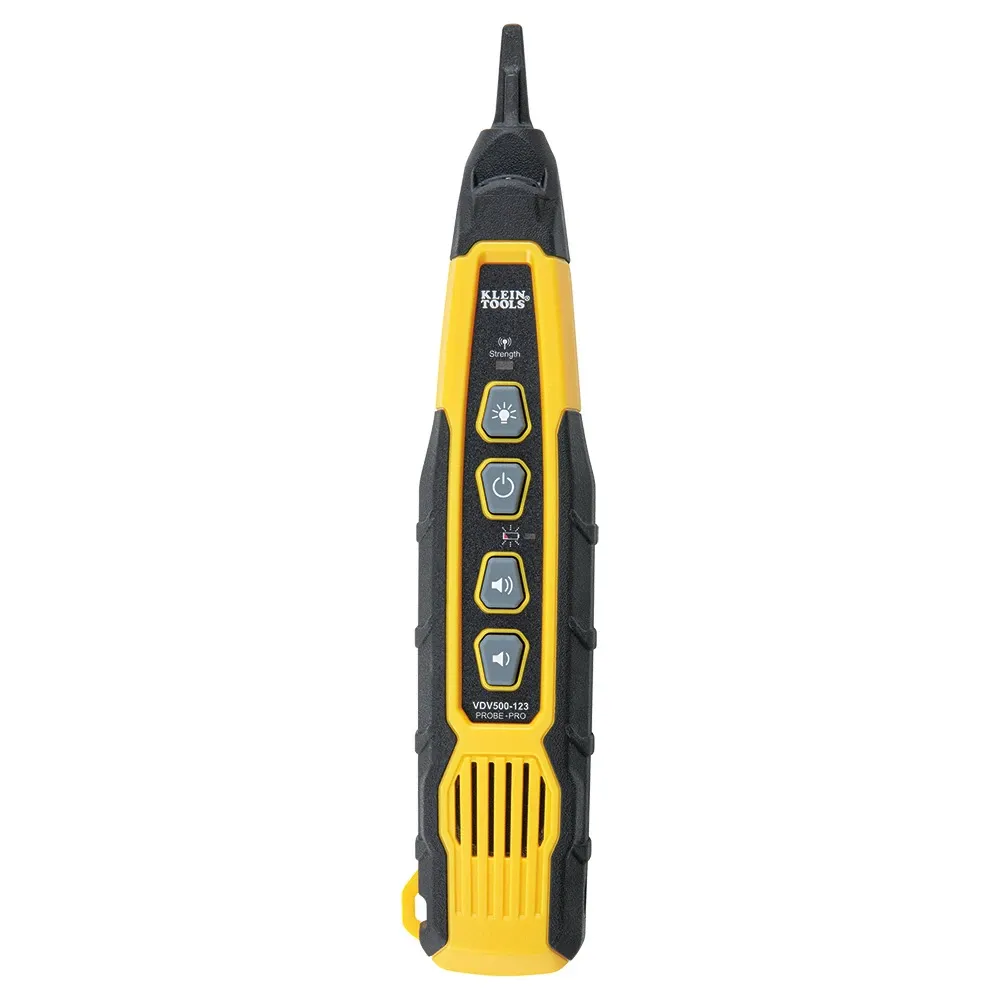
TL;DR: A wire tracer probe is a handheld tool used to find and identify the correct non-energised cable by detecting a tone placed on the wire. In the UK, it is commonly used by electricians, telecom engineers and facilities teams to trace cables in comms cabinets, patch panels, ceiling voids and refurbishment projects where labels are missing or unreliable.
A wire tracer probe helps you identify and trace a specific non-energised cable quickly by sensing a tone sent along that wire. CableProbe stocks the Klein VDV500-123 tracer probe for UK professionals. CableProbe stocks the Klein VDV500-123 tracer probe for UK professionals. In practice, it is one of the most useful diagnostic tools for UK electricians, telecom engineers and facilities teams because it reduces guesswork, speeds up fault-finding and lowers the risk of working on the wrong cable.
When you need to identify the right cable in a crowded riser, trace a pair through a comms cabinet, or confirm continuity before making changes, the right probe saves time and helps prevent costly mistakes. Moreover, in older British buildings with mixed legacy cabling and inconsistent labelling, that speed and certainty matter even more.
Key Takeaways
- A wire tracer probe is used to identify and trace non-energised wiring by detecting a tone placed on the cable.
- It is especially valuable in UK comms cabinets, patch panels, telecom rooms, ceiling voids and refurbishment projects where cable labelling is missing or unreliable.
- The best results come from pairing a sensitive probe with a dependable tone source and using a disciplined tracing method.
- For UK professionals, features that matter most include clear audible indication, dark-cabinet usability, robust build quality and suitability for telecom and network environments.
- CableProbe is built around these real-world needs: The Professional Network Cable Tracer for Precision Wire Identification.
What is a wire tracer probe?
A wire tracer probe is a handheld detection tool used to locate and identify a specific cable by sensing a tracing signal, often called a tone, applied at the far end. In simple terms, one part of the system sends a signal onto the cable, while the probe detects that signal along the route or at termination points. As a result, you can separate the correct wire from a bundle without stripping back insulation unnecessarily or disconnecting multiple services by mistake.
In the UK, the term is often used interchangeably with tone probe or cable finder probe, although there can be subtle differences depending on the product category and industry. In telecoms and structured cabling, a wire tracer probe is typically associated with tracing non-energised low-voltage cabling such as twisted pair, telephone pairs and network runs. If you want a deeper comparison of adjacent tool types, see Tone Probe Explained: A UK Buyer's Guide and Cable Finder Probe Explained: A UK Buyer's Guide.
The principle is straightforward; however, probe quality makes a major difference. In a congested cabinet with dozens or hundreds of cables, a weak or imprecise probe can create uncertainty. By contrast, a professional-grade wire tracer probe gives a clearer response, helping the engineer isolate the intended cable faster and with greater confidence.
What does a wire tracer probe do?
A wire tracer probe detects an injected tone on a cable so you can follow that cable through bundles, cabinets or outlets and confirm which one is yours. Therefore, instead of manually checking each conductor or relying on poor labelling, you can narrow down the target run much more quickly.
Based on our testing in dense cabinet-style scenarios typical of UK offices and plant rooms, the biggest advantage is not just speed but clarity. A better probe gives more confidence when several similar cables are routed side by side or terminated closely together.
Why are wire tracer probes important on UK jobs?
Across the UK built environment, cable tracing is not a niche task. Rather, it is part of routine moves, adds and changes, fault-finding, refurbishments and maintenance work. Whether the site is a city-centre office, a school upgrading classroom data points, an NHS building with mixed-age infrastructure, or an industrial unit with decades of extensions added over time, cable identification errors can waste hours.
The challenge is compounded by the age of much of the UK building stock. According to Office for National Statistics housing stock data, older buildings remain common across Britain. Commercial and public-sector estates often show similar complexity, with layers of retrofit cabling and inconsistent documentation. In those environments, a wire tracer probe is not simply convenient; it is an essential diagnostic instrument.
For telecom engineers and electricians in particular, the value is clear:
- Less time spent manually checking cable after cable
- Lower risk of disconnecting the wrong pair or data run
- Faster fault isolation during service calls
- Better productivity on large estates and multi-cabinet installations
- Improved confidence when labels are missing, duplicated or inaccurate
These are practical benefits seen daily in British buildings where infrastructure has evolved in stages and records are often incomplete.
How does a wire tracer probe work?
At its core, a wire tracer probe works by detecting an injected signal on a target cable. The signal is applied by a matching generator or transmitter, often clipped onto the cable pair or connected to a termination. The probe then senses the electromagnetic field associated with that signal and gives audible feedback that becomes stronger as you approach the correct cable.
How do you use a wire tracer probe step by step?
- Isolate and confirm that the target is non-energised if required by the equipment specification and site procedure.
- Attach the tone source or transmitter to the cable pair, socket or termination point.
- Move to the suspected cable route, patch panel, frame or cabinet.
- Use the wire tracer probe to scan cable bundles, outlets or terminations.
- Listen for the strongest and clearest tone response to identify the correct cable.
- Then verify the cable before carrying out changes, repairs or disconnections.
Why do sensitivity and selectivity matter?
Not all probes perform equally. In an open installation with few cables present, even basic units may seem acceptable. However, in a dense UK comms room, sensitivity without control can become part of the problem. A professional wire tracer probe needs enough sensitivity to find difficult signals but enough selectivity to distinguish one target from nearby cables.
This balance matters particularly in environments with tightly packed patch leads, parallel runs, legacy telephony blocks and awkward access. Consequently, well-tuned detection can mean the difference between fast identification and prolonged trial-and-error work.
Is it safe to use on live circuits?
No. A wire tracer probe is designed for non-energised wiring only. Connecting a tone generator to live mains voltage can damage the tool and create a serious safety hazard. Always isolate the circuit, prove dead and follow your site's safe system of work before tracing. The Klein VDV500-123 features a replaceable non-metallic conductive tip to reduce shorting risk near live terminals.
Why is non-energised tracing preferred on UK sites?
Most structured cabling and telecom fault-finding in the UK involves dead circuits — patch panels, data outlets, alarm loops and telephone pairs. Non-energised tracing gives clean, unambiguous tone identification without the complications of live-circuit accessories. CableProbe's positioning is clear: built for UK electricians and telecom engineers who need to trace non-energised wiring instantly, even in the darkest comms cabinets.
Where is a wire tracer probe used in the UK?
A wire tracer probe has broad applications across British commercial, public-sector and light industrial sites. For example, it is commonly used in:
- Office comms cabinets and server rooms with dense patch cabling
- Retail and hospitality fit-outs with mixed legacy and modern wiring
- Schools, hospitals and council buildings undergoing refurbishment
- Residential network upgrades with multiple Ethernet outlets per room
- Telecom fault-finding on CW1308 pairs and structured cabling runs
As one Reddit user in r/HomeNetworking noted when planning a new build with Ethernet in every room, labelling and tracing infrastructure early prevents costly guesswork later — a wire tracer probe is the tool that makes that mapping practical on existing installs too.
Best practices for wire tracer probe use
Even experienced engineers benefit from a consistent process, particularly on unfamiliar sites. Common mistakes to avoid include:
- Tracing without confirming the circuit is non-energised
- Setting sensitivity too high in dense cable bundles
- Relying on labels alone without acoustic verification
- Skipping final confirmation before making changes
However, the right technique significantly reduces these risks. Use a suitable tone source, scan slowly, compare adjacent cables and verify the strongest, clearest signal before carrying out any work.
Frequently asked questions about wire tracer probes
What is the difference between a wire tracer probe and a tone probe?
In the UK, the terms are often used interchangeably. In telecom and structured cabling contexts, a wire tracer probe effectively functions as a tone probe because it detects a tracing signal applied to a non-energised run. Some suppliers use different names depending on market segment or accessory bundle.
Can a wire tracer probe be used on network cables?
Yes. On suitable non-energised network cabling, a wire tracer probe can help identify runs in patch panels, wall outlets and cabinet terminations. Always check the manufacturer guidance and follow site procedures. The Klein VDV500-123 is compatible with Klein analogue tone generators for fast wire tracing across installations.
Does every electrician need a wire tracer probe?
If you regularly work on cable identification, fault-finding, refurbishments or alterations, the answer is often yes. It is particularly useful where labelling cannot be trusted or the installation has grown organically over time.
Can a wire tracer probe find faults as well as cables?
It helps with fault-finding by allowing faster identification of the correct run, but it does not replace full test instruments. Instead, it should be seen as a first-line diagnostic tool that supports efficient investigation.
Final thoughts: choosing a wire tracer probe for UK work
A wire tracer probe is a practical essential tool for identifying non-energised cables quickly, accurately and with less disruption. In crowded British comms cabinets, patch panels and legacy installations, it helps professionals work faster while reducing avoidable errors.
If your priority is precise, reliable wire identification in real-world UK conditions, CableProbe is built for that job. The Klein Tools VDV500-123 Cable Tracer Probe offers a replaceable non-metallic tip, integrated LED work light and adjustable sensitivity — £222.77 inc. VAT with free UK delivery and 30-day returns.
Stop guessing which wire is which
Order the Klein PRO Cable Tracer Probe today — dispatches Monday morning with secure checkout and 12-month warranty.
View Product — Free UK DeliveryReady to upgrade your toolkit with CableProbe?
Equip Your Kit — £222.77